
Katy Roofing: Local Conditions & Project Planning
Storm exposure, roof-system choices and the right approval process for your Katy-area address.
Roofing in the Katy area involves more than choosing a shingle color. A home inside City of Katy limits and a home with a Katy mailing address in a surrounding community may follow different permitting and architectural-review processes. Cinco Ranch I, Cinco Ranch II and Grand Lakes also publish their own homeowner guidance.
This chapter brings those local considerations together. Use it to prepare questions about your roof, identify the responsible authority and association, and compare a contractor's proposed scope. The Guild publishes guidance and accepts introduction requests; it does not perform roofing work or maintain a confirmed local contractor roster.
For the focused project path, see Katy residential roof repair and replacement. That page explains what to include in a repair or replacement request. A suitable independent contractor and their availability must be confirmed separately.
Ask about a contractor introduction
Tell us about your project. A suitable independent contractor must be confirmed before an introduction can be made. Contractor availability, an estimate and a response time are not guaranteed.
Roofing Challenges in Katy
Katy's inland location does not remove its exposure to severe thunderstorms or tropical weather. The National Weather Service Houston/Galveston thunderstorm guide discusses damaging wind and hail in southeast Texas. The City of Katy hurricane-preparedness guide identifies high winds and heavy rainfall among local storm hazards. These sources establish the planning context, not the condition of an individual roof.
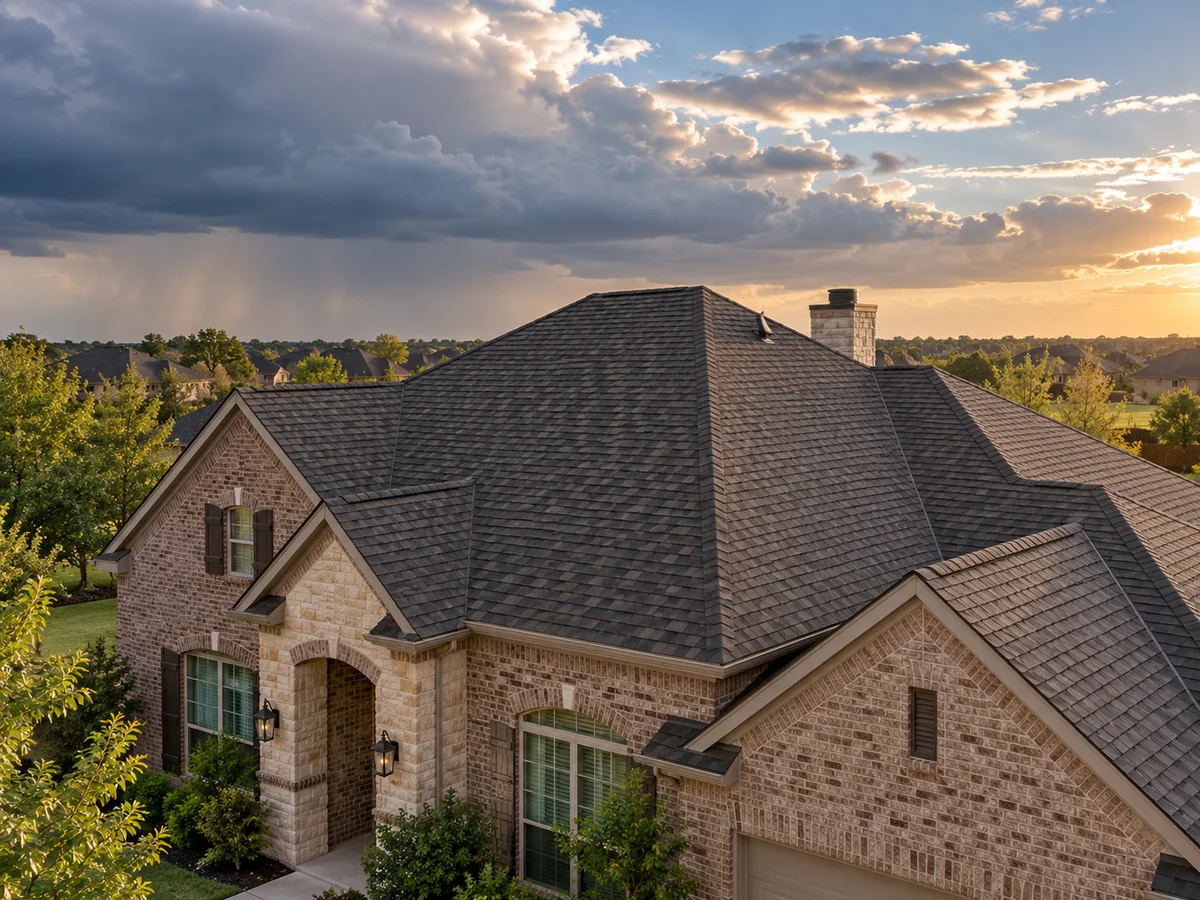
Architectural illustration; not a photograph of a Guild project or a specific Katy property.
Thunderstorm Wind and Hail
Ask a roofer to document what is damaged and where: the roof covering, ridge, flashing, vents or another component. A photograph of a missing shingle or an interior stain is useful context, but it does not establish the full repair scope. Have the contractor distinguish a localized defect from wider wear before proposing replacement.
If comparing impact-resistant shingles or wind-rated systems, ask for the specific product rating, installation requirements and warranty terms. A rating is not a promise that the roof will avoid damage in every Katy storm. See the hail-damage planning guide for background.
Tropical Rain and Roof Transitions
The City's preparedness guidance makes tropical-weather planning relevant even this far inland. For a roofing assessment, ask about valleys, wall junctions, chimney or skylight flashing, penetrations and roof drainage. The proposal should identify the details included in the work, rather than describing only the visible shingles.
Roof leaks and water entering from ground-level flooding are different problems to investigate. Describe where water appeared and when; a roofer's assessment should identify whether the proposed roofing work addresses that particular entry path. Do not assume that replacing the roof resolves every source of water intrusion.
Attic Conditions and Ventilation Choices
Include attic observations in the project discussion: persistent dampness, visible staining, existing intake and exhaust vents, or recent changes to insulation. Ask the contractor to assess the existing assembly and explain how any ventilation change fits it. Adding a vent product without considering the rest of the system is not a complete specification.
A repair may leave the wider assembly untouched; a replacement is an opportunity to ask whether ventilation work belongs in the scope. The attic-ventilation guide provides questions for that conversation. Recommendations still depend on the actual house and roof system.
Materials That Fit the House and Community
Roof performance and neighborhood appearance need to be considered together. Before committing to a different shingle profile, color, metal finish or roof accessory, identify your association and its current review process. The Cinco Ranch II homeowner page specifically directs owners to roofing-material guidelines; other associations have their own documents.
Ask for the proposed product and color by name, with the supporting samples or specifications your reviewer requests. Architectural approval does not replace a contractor's responsibility to assess installation requirements, structural suitability and the agreed roof-system details.
Building Permits, Codes & HOA Controls
Start with the property address and proposed work. Municipal permitting, association approval and the construction agreement serve different purposes; completing one does not establish that the others are settled. Confirm the current requirements directly before scheduling work.
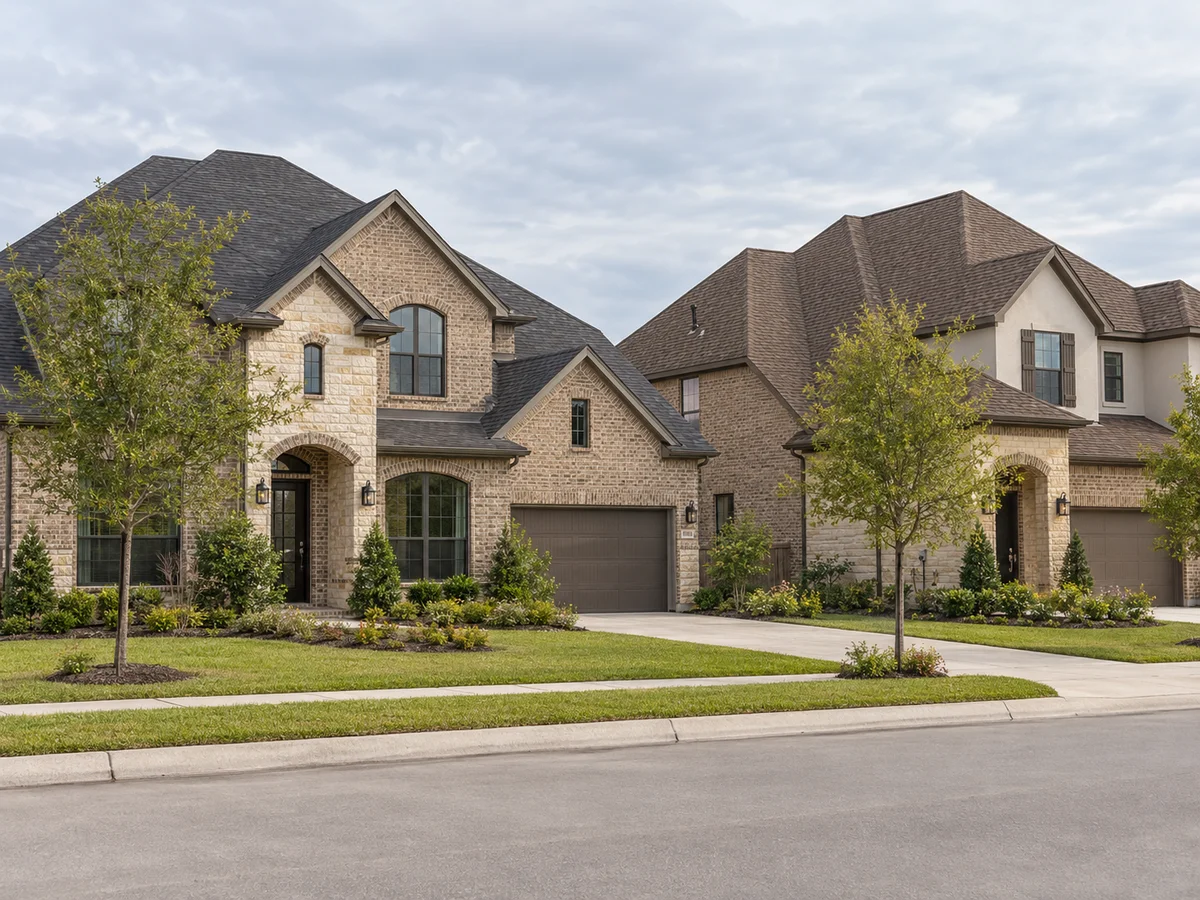
Architectural illustration; not a photograph of a Guild project or a specific Katy property.
City Limits and Permit Responsibility
The City's address and district guidance explains that a Katy mailing address does not establish that a property is within City of Katy limits. Verify the jurisdiction for your parcel before applying a City's permit rules to it.
The City of Katy Permit & Building Services page includes roofing in its permit guidance and links to the City's application and inspection portal. Ask who will confirm the permit scope, submit any required application and arrange inspections. For properties outside the City, contact the authority responsible for that address rather than assuming the City process applies.
Cinco Ranch I and Cinco Ranch II
These are separate associations with separate guidance. Cinco Residential Property Association's home-improvement page directs owners to current architectural guidelines and its Architectural Review Committee application process for exterior changes.
Cinco Ranch II's home-improvement page explicitly distinguishes its documents from Cinco Ranch I's, lists roofing-material guidance and explains its Design Review Committee process. Identify your association and confirm the submission requirements for the exact roofing work. Do not use one association's materials list or approval as evidence for another property.
Grand Lakes Architectural Review
Grand Lakes HOA's owner-information page tells owners to obtain the covenants for their phase and describes prior architectural review for exterior improvements visible from the road. Use that phase-specific starting point when discussing a roof change with management.
Ask what product/color information, photographs, application or other supporting details are needed for your scope, and how approval will be communicated. Keep the association's written response with the contractor's proposal. This guide does not approve a product or summarize every recorded covenant.
Roofing Planning in Katy
This guide covers roofing considerations in Katy. Confirm contractor availability, municipal requirements and neighborhood approvals for your specific project before hiring.
Neighborhoods and Communities in the Katy Area
These examples identify different planning paths, not confirmed contractor service territories. Check your address and association documents; a ZIP code or neighborhood name alone does not settle permitting or architectural approval.
For a property inside the City, begin with City Permit & Building Services. Confirm the scope for a repair, replacement or work that changes the structure, and ask your contractor to include permit and inspection responsibilities in the agreement. An address outside the City needs its own jurisdiction check.
Use the Cinco Residential Property Association homeowner resources and ARC process that apply to your property. Prepare the proposed material, color and exterior changes before requesting review. The association's current page and documents are a better starting point than a neighbor's old approval or an unrelated Cinco Ranch II checklist.
Use Cinco Ranch II's DRC resources and roofing-material guidance. Confirm whether your proposal is a maintenance item or a change requiring a submission, and what supporting information management needs. Review lead time belongs in the project plan; the Guild does not promise an approval date.
Obtain the covenants for your phase and confirm the current ARC process with the association. A replacement proposal should make the proposed appearance clear enough for review. Keep the review decision and any conditions together with the final product selection so the contractor and homeowner are working from the same scope.
Planning Process for a Katy Roofing Project
These are typical project stages to discuss with your independent roofer. Timing, approvals, installation methods and warranties depend on your contractor, property and chosen system.
Document the Existing Problem
Describe the location and timing of leaks or visible damage, roof material, approximate age if known, and previous work. Ask the contractor to document findings and explain whether the recommended scope is a targeted repair, wider remediation or replacement. Separate confirmed findings from assumptions.
Compare a Written Scope
Compare more than the shingle name. Ask about removal, decking allowances, flashing, penetrations, underlayment, ventilation, cleanup and warranty terms where relevant. Clarify exclusions, fees, payment terms and how changes to the scope will be agreed directly with the contractor.
Resolve Address and Association Approvals
Confirm the jurisdiction, required permit/inspection steps and any HOA review for the proposal. Obtain the applicable decisions before treating the start date and material order as settled. The contractor should explain how weather, approvals and product availability affect the proposed schedule.
Keep the Handover Record
Agree what completion documentation you will receive: final scope and product information, applicable inspection results, warranty documents and a clear contact for workmanship questions. Construction obligations and warranties belong to the independent contractor and the agreed product providers.
Localized Roofing Intelligence
Answers to common Katy-area planning questions, from jurisdiction and HOA review to choosing the next step for your roof.
Does a Katy mailing address mean the City issues my roofing permit?
No. The City specifically distinguishes mailing addresses from City limits. Check the property's jurisdiction first, then ask the responsible authority and your contractor about the proposed scope. Start with the City's address guidance.
Can I use the same roofing approval checklist anywhere in Cinco Ranch?
Confirm which association and documents apply to your home. Cinco Ranch I and Cinco Ranch II publish separate home-improvement resources; Cinco Ranch II specifically says its guidance is not for Cinco Ranch I. Use the relevant association's current process and confirm the requirements for your proposed work.
Where should a Grand Lakes homeowner start?
The HOA directs owners to the covenants for their phase and its architectural-review process. Ask management what is needed for the proposed roof material, color and visible exterior changes. A general Katy roofing guide cannot replace that property-specific review.
Does storm damage always mean a full replacement?
A site-specific assessment is needed. Ask the roofer to document the cause, extent and condition of the roof, and explain why a repair or replacement is recommended. This guide cannot diagnose damage or promise that a particular scope will be suitable.
How do I request help with a repair or replacement?
Use the focused Katy roof repair and replacement page to describe the project and request an introduction. Availability must be confirmed separately; the Guild does not guarantee a contractor, inspection, estimate, booking or response time.
What information makes my request more useful?
Include your Katy-area neighborhood or ZIP code, the problem or intended work, current roof material, approximate age if known, and whether an association review is involved. Keep sensitive documents and access codes out of the form. Agree construction scope and fees directly with an independent contractor.
Continue planning your project
Compare the project guidance with local soil, weather and permitting considerations. These guides describe planning areas; contractor availability is confirmed separately.