Roofing in Frisco, TX: Local Project Guide
Aging builder-grade shingles, hail damage, replacement options and HOA planning for Frisco homeowners.
Frisco presents a roofing challenge unlike any other market in North Texas. The city's extraordinary growth over the past two decades — it was one of the fastest-growing cities in the United States for nearly a decade straight — means an enormous volume of production builder homes are aging simultaneously. The roofing installed on homes built during Frisco's 2000s–2010s building boom was, in many cases, the minimum the production builders could legally specify: lightweight 3-tab asphalt shingles rated for 25 years under ideal conditions, installed in a climate that degrades those materials significantly faster than the warranty suggests.
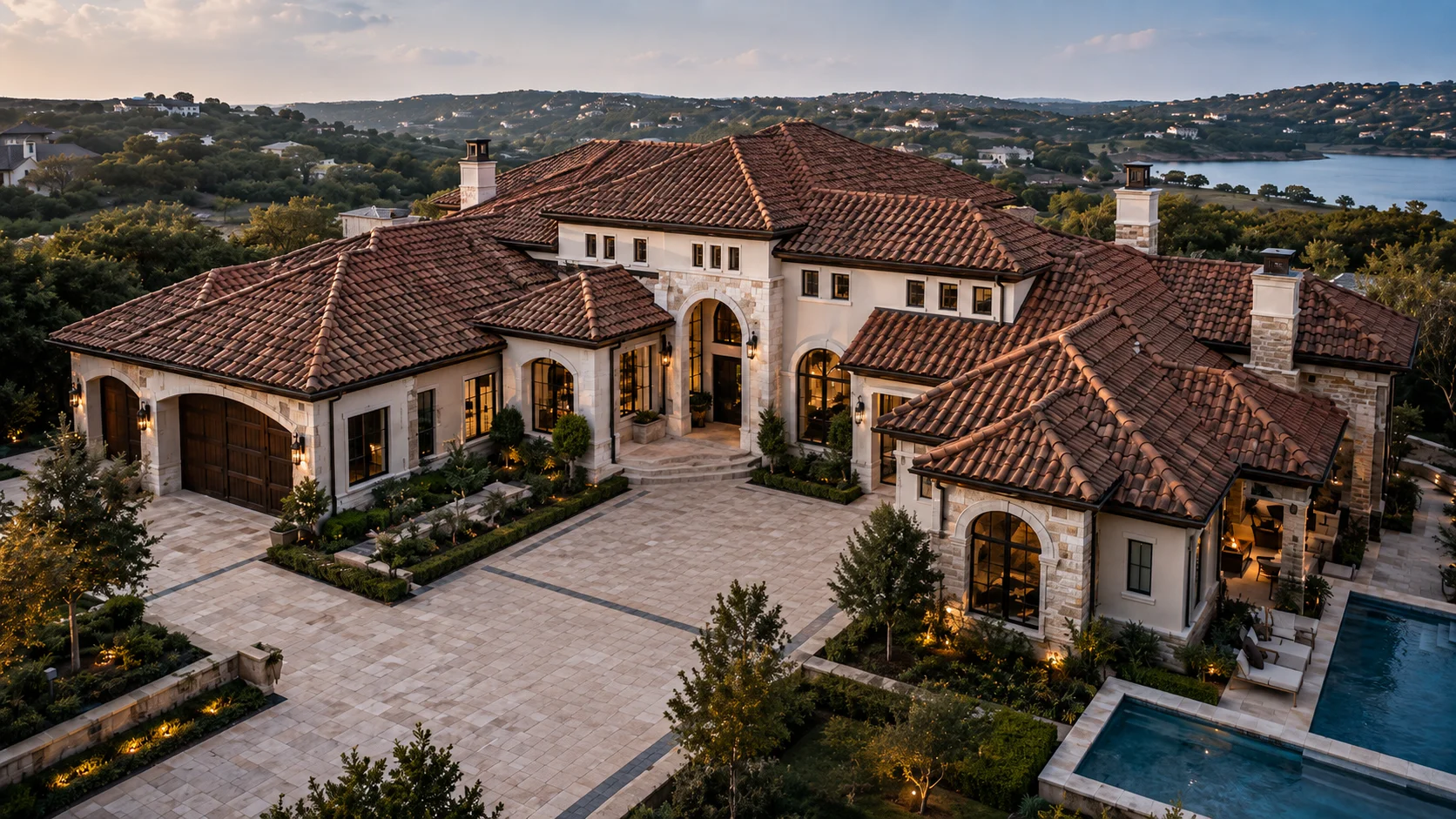
At the same time, Frisco's northern edge has developed into something entirely different — communities like Fields, where custom homes start at $3.5 million and premium roofing materials are expected from initial construction. Serving both ends of this market requires breadth and depth that most roofing companies don't have.
Ask about a contractor introduction
Tell us about your project. A suitable independent contractor must be confirmed before an introduction can be made. Contractor availability, an estimate and a response time are not guaranteed.
Roofing Challenges in Frisco: Why This Market Demands a Higher Standard

Hail Alley: Collin County's Recurring Storm Season
Frisco's position in Collin County places it firmly within the hail belt that runs across the DFW metroplex and into North Texas. Severe thunderstorm season — primarily April through June — brings the same supercell storm systems that affect Tarrant County to the south, with hailstones regularly reaching 1 inch in diameter and occasional events producing 2-inch or larger stones. These are the storms that generate thousands of roofing insurance claims across the DFW metro in a single afternoon.
Collin County hail events have been among the most significant in recent years. Several storms tracking through the northern suburbs have produced widespread damage across entire Frisco zip codes simultaneously — meaning every roofing contractor in the area is suddenly backlogged, material supplies tighten, and homeowners face months-long waits if they don't act quickly. Understanding this dynamic is part of why getting an inspection done promptly after a storm matters: insurance claims have deadlines, and contractor availability becomes extremely constrained in the weeks immediately following a major event.
Hail damage on Frisco's predominant roofing material — asphalt shingles — manifests as granule loss from the impact zones. Those granules are not cosmetic; they're the UV-blocking and weather-resistant layer that protects the asphalt mat underneath. When they're knocked loose by hail impacts, the degradation process accelerates. A roof that had 8 years of reasonable service life before a major hail event may have 3–4 years after one, even if the shingles still look intact from a distance.
The Builder-Grade Roof Crisis: Frisco's Most Pervasive Roofing Problem
This is the issue that sets Frisco apart from almost every other DFW roofing market. During the building boom years — roughly 2000 to 2015 — Frisco grew faster than nearly any city in America. Production builders like D.R. Horton, Lennar, Pulte, and others constructed tens of thousands of homes in Frisco during this period. These homes were well-marketed, competitively priced, and built to code. But "built to code" for roofing does not mean "built to last" in North Texas conditions.
The standard roofing specification on production builder homes during this era was typically a 3-tab asphalt shingle with a 25-year rated life. Under ideal conditions — moderate temperatures, low humidity, minimal UV exposure — a quality 25-year shingle might approach its rated life. In Texas? The math changes substantially.
Why builder-grade roofs fail faster in Texas:
Heat exposure. Roof surface temperatures in DFW regularly exceed 150°F during summer months. Sustained heat above 130°F begins to accelerate the oxidation of asphalt binders in the shingle mat. This isn't a defect — it's simply physics operating on a material that was designed for a milder climate. The 25-year rating on a 3-tab shingle is derived from testing conditions that don't replicate Dallas County's thermal reality.
UV degradation. Southernmost exposures on Frisco roofs receive intense solar radiation across a long sun season. UV exposure breaks down the adhesion between granules and the asphalt mat, causing granule shedding over time — you may notice this as discoloration in downspouts or granule accumulation in gutters. A roof losing granules is a roof losing its protective layer.
Thermal cycling. The swing between DFW summers and winter ice storms is substantial. Materials expand and contract across this temperature range. Over 10–15 years, the cumulative stress from thermal cycling affects the sealant strips between shingles (which maintain wind resistance), the nailing pattern's holding strength, and the integrity of any flashing.
Hail events. As described above, a Frisco builder-grade roof has almost certainly experienced at least one significant hail event during its service life — often several. Each one removes granules and shortens the effective remaining life.
The practical result: Frisco homeowners in homes built between 2000 and 2015 are dealing with roofs that were installed new at move-in and are now showing the effects of 12–20 Texas summers. Many of these roofs are at or past the point of reasonable service life, and the homeowners don't know it until they see water stains on a bedroom ceiling or find the gutter full of granules.
If your Frisco home was built during this era and you haven't had a professional roof inspection in the last two years, you should schedule one.
Texas Heat, UV, and Attic Ventilation
Everything that applies to DFW heat and roof longevity in Southlake applies equally in Frisco — amplified by the fact that Frisco's homes are more often production builds without the premium ventilation systems that custom homes typically include. Inadequate attic ventilation traps heat in the attic space, which transfers to the underside of the roof deck and creates the thermal stress described above — from below as well as above.
A proper re-roofing project in Frisco addresses attic ventilation as part of the scope. Adding ridge ventilation, ensuring proper soffit intake, and replacing any blocked or inadequate ventilation components is part of a complete roofing project, not an optional upgrade. In many cases, improving ventilation alone can meaningfully extend the service life of a new roof installation.
Hail and the Insurance Claims Process in Frisco
Frisco homeowners have a right that their insurance carriers don't always volunteer: you are not required to use the insurance company's preferred contractor list when filing a storm damage claim. The carrier's preferred vendors are contractors who have negotiated pricing agreements with the insurance company — which typically means the carrier benefits, not you. You are entitled to hire any licensed contractor you choose, and your carrier is required to work with that contractor on your claim.
This matters in Frisco because insurance adjuster estimates after major hail events frequently undervalue the scope of damage — particularly on builder-grade roofs where shingles are at or near end of life and hail damage has accelerated the deterioration. Adjusters working multiple claims under time pressure may miss granule loss patterns, improperly document wind damage to valley flashing, or use replacement cost figures that don't reflect current Frisco material and labor pricing.
You should never accept a final insurance settlement before a qualified roofing contractor has reviewed the adjuster's estimate.
What the Right Roofing Approach Looks Like in Frisco
Complete System Assessment, Not Just Surface Inspection. A proper Frisco roofing inspection goes beyond walking the roof and noting visible damage. It includes attic access (to inspect the underside of the deck for moisture, mold, or ventilation deficiencies), gutter inspection (granule accumulation tells the story of shingle deterioration), and documentation of all penetrations, flashing, and ridgeline conditions.
Honest Recommendation: Repair vs. Replace. Some contractors steer toward replacement regardless of actual conditions. Others patch roofs past their reasonable service life. But for a 15-year-old 3-tab builder-grade roof with documented hail damage, the honest answer is usually that replacement is more economical than continued repair.
These choices affect both long-term performance and insurance premiums.
HOA Compliance from the Start. With 200+ active HOAs in Frisco — each with their own approval processes and material standards — confirming HOA requirements before specifying materials is non-negotiable.
Building Permits, Codes & HOA Controls
City of Frisco Permit Requirements
The City of Frisco requires a building permit for roof replacements. The permit must be obtained before work begins. Frisco operates a fully online permit system — there is no counter walk-in process. All residential roofing permit applications are submitted through the Electronic Plan Review (EPR) portal at frisco-tx-us.avolvecloud.com.
Simple residential re-roof permit applications are typically reviewed within 5–7 business days from submission. More complex projects (those involving structural decking replacement, change in material type from original, or commercial structures) may require additional review time.

Key permit checklist items:
- Property address and legal description
- Contractor license number and insurance certificates
- Scope of work (full replacement vs. partial; decking scope)
- Material specifications (manufacturer, product line, color name)
- Square footage of roof area
Frisco HOA Requirements
Frisco has more active HOAs than almost any city its size in Texas — a reflection of the master-planned community development that drove its growth. While HOA requirements vary significantly by community, the following applies across most Frisco HOAs:
- Roofing material type and color must be approved before installation
- Neutral, earth-tone color palettes dominate approved lists (charcoal, weathered wood, driftwood, slate gray)
- Bright or non-standard colors are almost universally rejected
- High-visibility synthetic materials (unpainted metal in non-standard colors, bright TPO on visible slopes) require special approval
Starwood HOA Note:
Starwood's ACC is among the most thorough in Frisco. As a premier gated community, Starwood requires a complete material approval package including manufacturer product specifications, color chips, and contractor documentation before any installation. Plan 3–5 weeks for ACC review.
Fields Community Note:
Fields is a newer development with premium standards baked into its CC&Rs from the start. Minimum material specifications in Fields exceed what most HOAs require — architectural shingles are the minimum, with metal and tile dominant on custom builds. Fields HOA review processes are thorough but efficient; contact the community manager early in the planning process.
Combined Project Timeline:
A full Frisco roof replacement with HOA approval and city permitting typically requires 5–9 weeks from initial assessment to completed installation, depending on material availability and HOA review timelines. Insurance claims add additional time if supplemental claim documentation is needed.
Roofing Planning in Frisco
This guide covers roofing considerations in Frisco. Confirm contractor availability, municipal requirements and neighborhood approvals for your specific project before hiring.
Local Planning in Frisco's Premier Neighborhoods
Starwood is Frisco's flagship gated community — a private, guard-gated enclave of more than 900 custom and semi-custom homes that has anchored the city's luxury market since the late 1990s. The community features resort-level amenities, manicured streetscapes, and an Architectural Control Committee that takes its oversight responsibilities seriously.
Roofing projects in Starwood require a complete ACC submission package before any work begins. This includes manufacturer specification sheets, physical color chips, contractor license and insurance documentation, and a site plan or photo documentation of the specific home and roof layout. Incomplete packages are returned without action, which delays the project by another ACC meeting cycle.
The homes in Starwood represent a range of architectural styles — Mediterranean-influenced designs with tile roofs, traditional Texas stone homes with architectural shingles, and transitional contemporary builds where standing seam metal is increasingly common. Each requires a contractor who understands how to specify and install the right material for the architectural intent of the home. This is not a development where a one-size-fits-all approach works.
Many Starwood homes built in the late 1990s and early 2000s have concrete tile roofs now reaching end-of-life territory. The tile color-matching challenge that Timarron in Southlake faces applies equally here — discontinued colors, changed manufacturer lines, and the need to work through the ACC on approved alternative products.
Phillips Creek Ranch is one of Frisco's most popular mid-luxury master-planned communities — a thoughtfully designed development featuring resort amenities, miles of trails, and a diverse mix of builders that resulted in a substantial volume of homes in the 2010–2018 construction range. The community's size and the age of its housing stock make it one of the highest-activity roofing markets in all of Frisco.
Homes in Phillips Creek Ranch built in the early-to-mid 2010s are now in the 12–15 year range — precisely the window when Texas builder-grade roofs begin showing significant deterioration. Granule loss in gutters, early shingle curling on south and west-facing slopes, and wind-lifted corners at eaves are common presentations. Hail events that tracked through Collin County in recent years have accelerated this deterioration on already-aging shingles.
Insurance claims are a significant portion of the roofing work happening in Phillips Creek Ranch right now. If you live in PCR and experienced any of the major DFW hail events of the past several years, there's a meaningful probability your roof sustained damage that an initial insurance inspection may have undervalued.
Most homes in Phillips Creek Ranch feature architectural shingles — an upgrade from the 3-tab shingles used in lower-price-point Frisco developments, but still approaching the end of their reasonable Texas service life in many cases. The HOA requires standard ACC approval for roofing work; neutral shingle colors dominate the approved palette.
Fields is a category unto itself in the Frisco roofing market — and arguably in all of North Texas residential real estate. Located along the Dallas North Tollway corridor north of the PGA headquarters, Fields is Frisco's most ambitious mixed-use luxury development, featuring custom home sites where prices start at $3.5 million and top-tier amenities including a Greg Norman-designed golf course and resort pool complex. The homes being built here represent some of the most significant residential construction happening anywhere in Texas.
Roofing material expectations in Fields align with the homes themselves: architectural shingles are the minimum, and metal and tile systems are the dominant choices on custom builds. Standing seam steel and aluminum, copper accent details, flat-laid concrete tile, and premium clay tile products appear across the community. These are materials that require specialist knowledge to install correctly — and installations that will be scrutinized.
Fields is also where roofing-solar coordination is most common. Custom homes in Fields are increasingly specified with integrated solar systems from the initial build — not retrofitted afterthoughts, but architecturally integrated photovoltaic systems designed in partnership with the roofing system.
The Fields HOA and community development standards require thorough pre-approval of all roofing work. Given the caliber of construction here, no one is cutting corners on the approval process.
Edgestone at Legacy is a newer master-planned community positioned in the Legacy corridor of Frisco — a premium address that benefits from proximity to major corporate campuses and the Frisco ISD's highly regarded schools. The community draws a mix of builders, from national production homebuilders constructing quality mid-luxury homes to custom and semi-custom builders working on estate lots.
Edgestone's roofs are younger than most of Frisco's housing stock — many homes were completed between 2015 and 2022, putting them in the 4–10 year range. For most Edgestone homeowners, proactive replacement is not yet on the agenda. But the community has not been immune to DFW hail events, and several storms in recent years have produced legitimate insurance claims on homes that are otherwise performing well.
For Edgestone homeowners dealing with hail damage on a relatively new roof, the situation is different from a homeowner in Phillips Creek Ranch with a 15-year-old builder-grade system. Here, the roof may well be worth repairing — if the damage is documented properly and the insurance claim covers the correct scope. The risk is accepting an inadequate settlement and thinking the problem is resolved, only to find water intrusion issues 18 months later when the compromised shingles encounter the next severe storm.
What to Expect: The Frisco Roof Replacement Timeline
These are typical project stages to discuss with your independent roofer. Timing, approvals, installation methods and warranties depend on your contractor, property and chosen system.
Initial Assessment and Documentation
Confirm access, staging, fall protection, protection of landscaping and the installation sequence with your contractor. Agree how unforeseen decking damage or scope changes will be documented and priced, and how cleanup and final inspections will be handled.
Insurance Claim Documentation
For a storm-related project, retain dated photographs and the roofer’s written construction estimate. Ask your insurer which records it needs and how the claim will be assessed. An inspection or estimate does not guarantee coverage or payment.
HOA Application and Approval
Check your community’s current architectural rules before ordering materials. Agree who will prepare the application, product specifications, color samples and supporting documents. Confirm approval in writing and allow for the association’s actual review schedule.
City Permit Application
Confirm the permitting jurisdiction and current requirements for this property and scope. Agree who submits the application and arranges inspections. Do not treat an HOA decision as a substitute for a required public permit, or vice versa.
Material Ordering and Scheduling
Compare the proposed assembly, not only the visible roof covering: decking repairs, underlayment, flashing, ventilation and drainage all affect the scope. Confirm product availability, approved colors, delivery arrangements and exclusions in writing before setting an installation date.
Installation
Confirm access, staging, fall protection, protection of landscaping and the installation sequence with your contractor. Agree how unforeseen decking damage or scope changes will be documented and priced, and how cleanup and final inspections will be handled.
Final Inspection and Documentation
Agree the final walkthrough and any required inspections. Obtain the contractor’s workmanship warranty, relevant manufacturer registration documents, photographs and permit close-out records. Confirm who handles any outstanding items.
Localized Roofing Intelligence
Get authoritative insights on ventilation metrics, Class 4 impact shingles, insurance supplement processes, and city building inspection sequences.
My Frisco home was built around 2005–2010. How do I know if my roof needs replacing?
The short answer: get a professional inspection. But there are warning signs you can look for yourself. Check your gutters — if you see significant granule accumulation (the small, sand-like particles that look like coarse gravel), your shingles are shedding their protective coating. From the ground, look for shingles that appear to be curling at the edges or corners, or areas where shingles have a shiny, bald appearance where granules should be. Inside the attic, daylight visible through the decking, staining on the underside of the sheathing, or soft spots are all red flags.
A 3-tab shingle roof installed on a Frisco production home between 2000 and 2012 has almost certainly had at least one significant hail event and 12–20 North Texas summers. The realistic expectation is that many of these roofs are at or past end of reasonable service life, regardless of what year appears on the original warranty. An honest inspection tells you where your specific roof stands.
How do I know if my insurance carrier's preferred contractor is working in my best interest?
They may not be. Insurance company preferred contractor programs exist because carriers have negotiated pricing agreements with those contractors — pricing that benefits the insurance company's claim costs. Preferred contractors are not inherently bad, but there's an inherent conflict of interest: a contractor who relies on an insurance company for a significant volume of their work has a business relationship with that carrier that may influence how they handle your specific claim.
Review your policy and ask your insurer about contractor choice, claim requirements and documentation. A contractor’s construction estimate is separate from an insurer’s coverage decision.
What's the difference between a 3-tab shingle and an architectural shingle, and why does it matter?
A 3-tab shingle is a flat, single-layer shingle with cutouts that create the appearance of three separate shingles from a distance. It's the lightest-weight, least expensive asphalt shingle product and was the default specification on most production builder homes in DFW during the 2000s–2010s. Architectural (or dimensional) shingles are multi-layer products with a heavier profile that mimics the look of wood shake or slate. They're thicker, heavier, more wind-resistant, and carry longer manufacturer warranties.
In North Texas, the upgrade from 3-tab to architectural shingles is almost always worth making when you're replacing a roof. The cost premium is modest — typically 10–15% of the total project cost — but the performance difference in DFW conditions is significant. Architectural shingles handle hail impact better (more mass to absorb energy), resist UV degradation more effectively (thicker mat), and are more wind-resistant (heavier weight and better sealant strip design). Most quality architectural shingles carry 30-year to lifetime manufacturer warranties, versus 20–25 years for 3-tab products rated under the same conditions.
Are there impact-resistant shingle options that qualify for insurance discounts?
Yes — and for Frisco homeowners, this is worth understanding in detail. Class 4 impact-resistant shingles are the highest-rated designation under the UL 2218 testing standard, which simulates hail impact using steel balls of varying sizes dropped from specific heights. Products that pass Class 4 testing are certified to withstand the impact of a 2-inch steel ball — roughly equivalent to a golf ball-sized hailstone.
Some insurers offer discounts for qualifying impact-resistant roofing. Eligibility, the amount and required documentation vary by insurer. Obtain a written quote for your policy before treating any savings as part of the project budget. See the Texas Department of Insurance guidance.
Some insurers offer discounts for qualifying impact-resistant roofing. Eligibility, the amount and required documentation vary by insurer. Obtain a written quote for your policy before treating any savings as part of the project budget. See the Texas Department of Insurance guidance.
How many HOAs are in Frisco, and how do I find out what mine requires for roofing?
Frisco has more than 200 active HOAs — a function of the master-planned community development model that drove the city's growth. The requirements vary significantly from community to community; some are perfunctory approvals that take a few days, while others (Starwood being the clearest example) require detailed material packages and structured review processes.
Your HOA's governing documents — the Declaration of Covenants, Conditions, and Restrictions (CC&Rs) and the Architectural Standards document — define what's required. These are available from your HOA management company or from your county's deed records.
Can a contractor guarantee that my insurance claim will be approved?
No — and be cautious of any contractor who implies they can. Your insurance claim outcome depends on your policy terms, your carrier's assessment of documented damage, and the claims process — not on any contractor's influence. What a qualified contractor can do is ensure that your damage is thoroughly documented, that your claim submission is complete and well-supported, and that any supplemental items are properly identified and submitted. This gives your claim the strongest possible foundation. The rest depends on your policy and your carrier.
Do I need a separate permit for gutter replacement or repair?
In most cases, gutter replacement and repair in Frisco does not require a city building permit — gutters are considered a minor maintenance item rather than a structural building system. However, gutter work associated with a full roof replacement may be included in the roofing scope, and the roofing permit covers the project as a whole. If you're doing standalone gutter work, a permit is generally not required, but it's always worth confirming with the city's development services department if you're uncertain.
What happens if the contractor finds damaged decking during tear-off?
Decking damage is discovered frequently during tear-off — particularly on older Frisco homes where builder-grade roofs have been in place for 15+ years and water has had time to infiltrate through worn materials. Decking replacement is priced per board in the contractor’s written proposal, not included as a flat allowance that you might either over- or under-pay for. You pay for what's actually replaced, with documentation showing exactly what was done.
Continue planning your project
Compare the project guidance with local soil, weather and permitting considerations. These guides describe planning areas; contractor availability is confirmed separately.